Introduction
Turf Installation of Kingwood serves all Kingwood sections with drainage-first installation planning adapted to MUD infrastructure, clay soil conditions, and the mature tree canopy that defines the community's landscape character.
Loading content...

Artificial turf installation for Kingwood homeowners and property managers, designed around the community's master-planned landscape and MUD drainage infrastructure.
Kingwood was incorporated as a master-planned community in 1970 by Friendswood Development Company on land that had been East Texas timber country, shaped by the San Jacinto River East Fork and its network of creek tributaries — Bear Branch, Greens Bayou, and others. The design philosophy preserved that landscape character through strict tree preservation codes, winding street grids that followed natural topography, and a greenbelt trail network that connected sections through the wooded corridors between neighborhoods. The community grew through the 1970s, 1980s, and 1990s as one of the largest master-planned developments in the country, adding sections like Forest Cove, Trailwood, Sand Creek, Royal Brook, Kings Mill, Mills Branch, Bear Branch, North Woodland Hills, Mossy Ridge, Greentree Village, and Hunters Ridge while the original civic identity — closer to a self-contained suburban town than to a Houston neighborhood — remained strong. In 1996 the City of Houston annexed Kingwood over intense community opposition. Residents challenged the annexation through the courts, citing the fact that the City of Houston had not been part of the infrastructure investment that built Kingwood's water systems, roads, and drainage — all managed through the Municipal Utility Districts that Friendswood had established. The legal challenge ultimately failed and the annexation stood, but the MUD structure remained intact. Kingwood today is a Houston neighborhood for city tax and governance purposes, but the drainage infrastructure, water billing, and surface drainage management for most properties still runs through Harris County MUDs — a layered system that directly affects outdoor construction work including artificial turf installation. Turf Installation of Kingwood understands that infrastructure context. When we plan a turf installation in Forest Cove or Trailwood, we are working in sections where the drainage easements, detention system connections, and sub-surface infrastructure were established by MUDs four and five decades ago. The clay soil conditions in much of north Harris County add a persistent drainage engineering challenge that cannot be addressed with minimum-spec base preparation. And the mature tree canopy that defines Kingwood's character — protected by the Trees of Distinction program and the general cultural priority around tree preservation in this community — creates sub-surface root conditions that affect every excavation-based improvement project. Our service area covers all Kingwood sections from the original 1970s Forest Cove and Trailwood sections through the more recently developed Royal Brook and Kings Mill areas near the Harris-Montgomery county line. We design each scope around the specific section conditions, drainage infrastructure context, and site-level characteristics rather than applying a standardized installation approach that ignores Kingwood's complexity.
Turf Installation of Kingwood serves all Kingwood sections with drainage-first installation planning adapted to MUD infrastructure, clay soil conditions, and the mature tree canopy that defines the community's landscape character.
Kingwood-specific challenges include clay soil sub-base drainage limitations, mature tree root systems in original development sections, drainage easement restrictions near MUD infrastructure, and HOA design guidelines that vary between Kingwood Village sections and newer communities.
We address those conditions through soil-specific aggregate base design, root assessment and barrier installation in tree-dense sections, perimeter drainage design that respects MUD easement obligations, and HOA guideline review before scope finalization.
Property owners gain a turf installation designed for Kingwood's actual site conditions — one that drains correctly through Houston's saturation events, holds its edges through clay soil expansion cycles, and remains compliant with the HOA and MUD requirements applicable to the property.
Each Kingwood project follows site assessment by section, drainage and root condition evaluation, base specification, installation with section-specific edge treatment, and a final walkthrough that confirms performance against Kingwood's climate conditions.
We are based in Kingwood at 600 Rockmead Dr, Suite 200, and our crews are familiar with every section of the community — the access constraints in older neighborhoods with narrow gate clearances, the drainage behavior around the San Jacinto tributaries, and the tree canopy conditions that vary from Bear Branch to Royal Brook.
We work across the full range of Kingwood property types, from single-family residential to HOA common areas to commercial sites along the Kingwood Drive and FM 1960 corridors.
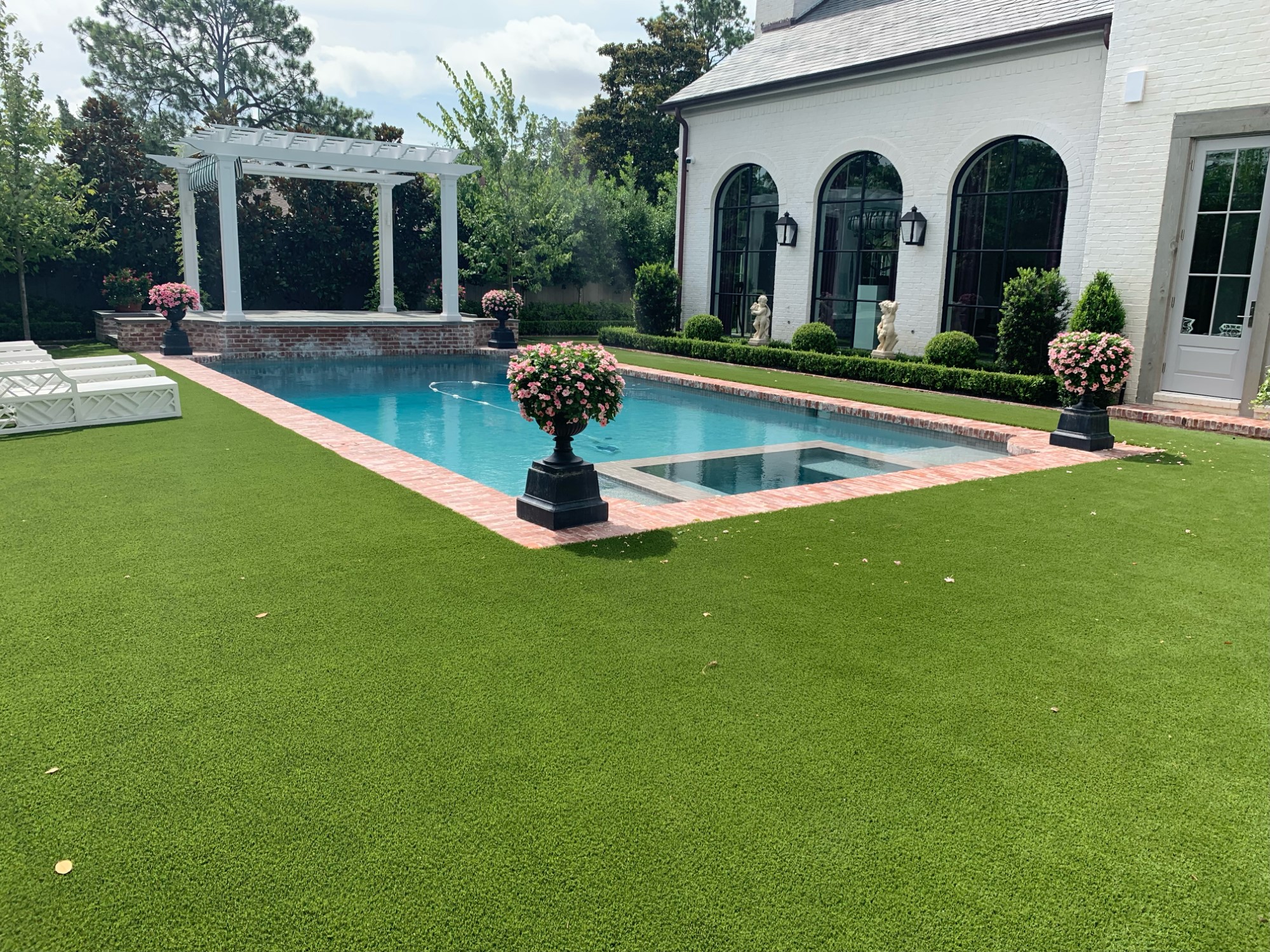
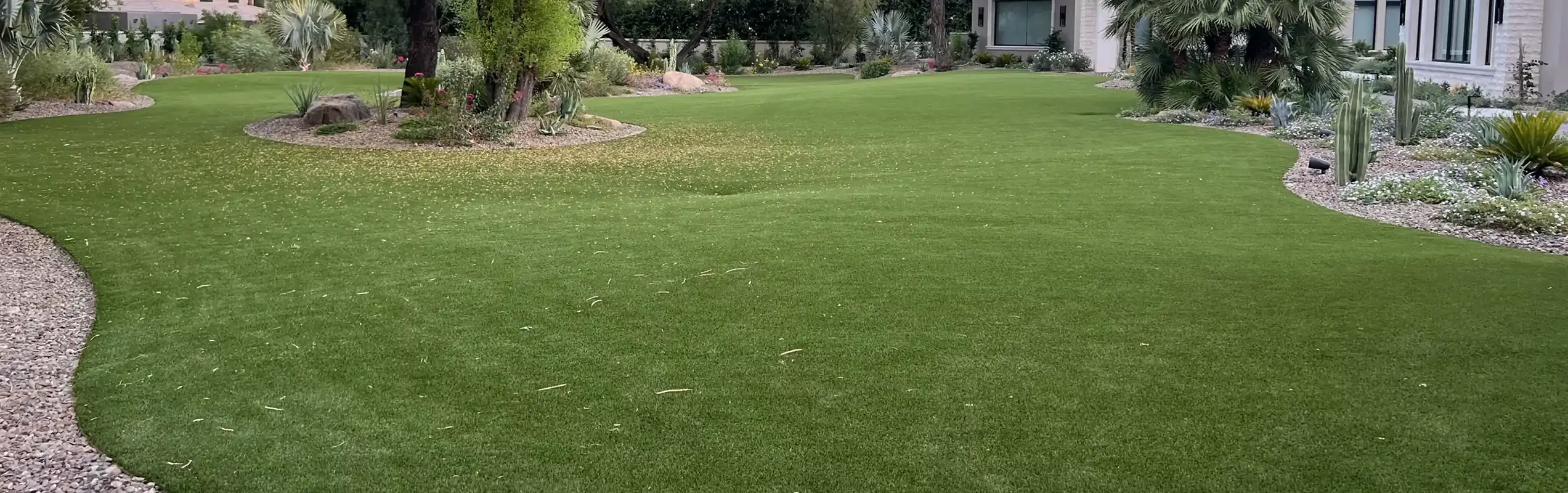
Backyard, side yard, and pet area installations for homeowners across all Kingwood sections — from the original Forest Cove and Trailwood homes with mature canopy and limited rear access to newer Royal Brook properties with more open yard configurations.
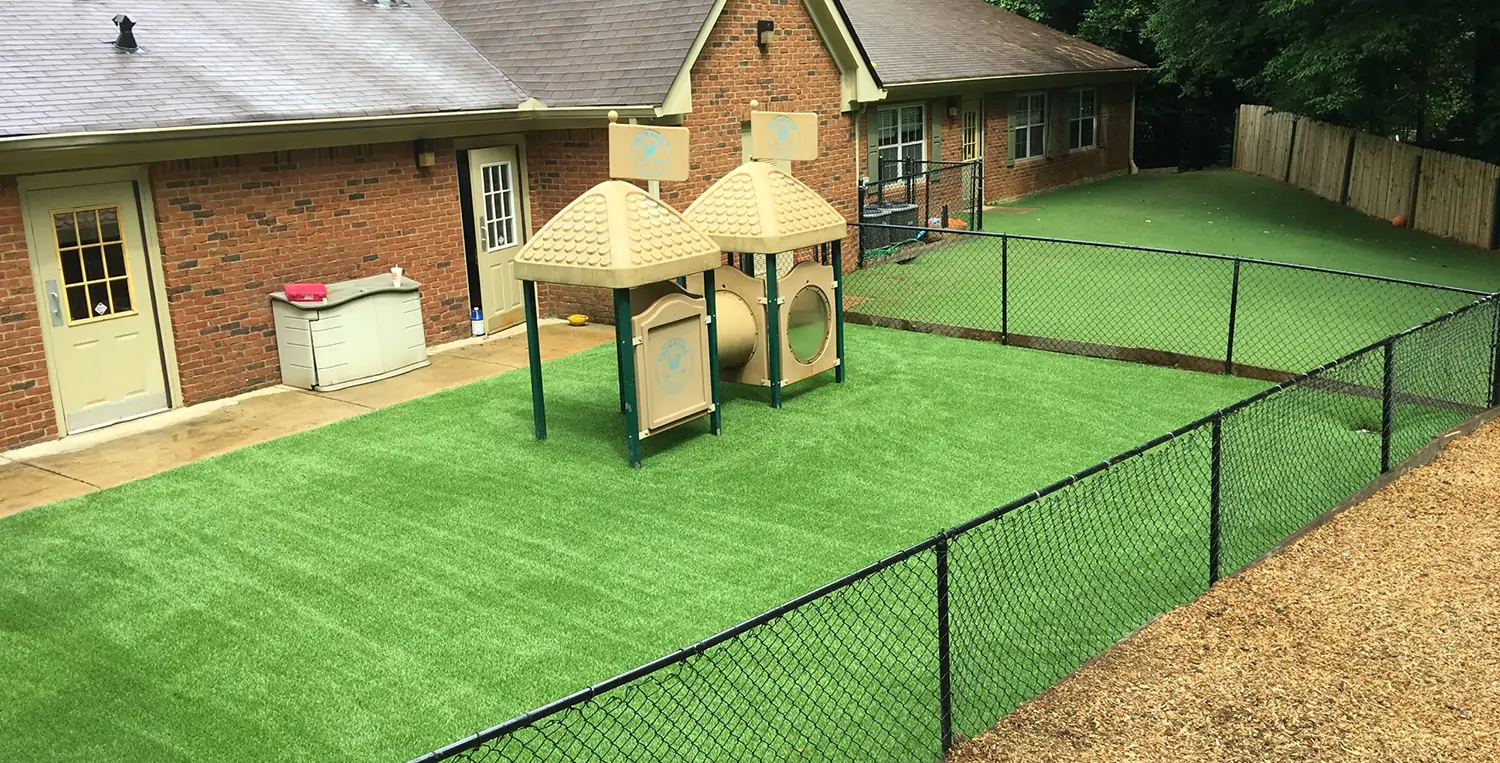
Neighborhood parks, playground surfaces, and community green spaces maintained by the Kingwood Village HOA and section associations, where drainage performance and appearance consistency are both required.
Retail, multifamily, office, and medical properties along Kingwood Drive, FM 1960, and the Atascocita Road corridor where artificial turf provides consistent year-round appearance without the irrigation and maintenance costs of natural grass.
Kingwood properties present a distinct combination of planning factors that our installation approach is designed to address.
Drainage easements and MUD-managed conveyance systems cross many Kingwood properties. We review easement locations and infrastructure proximity during site assessment to ensure the base drainage design works with the existing system.
Sections developed in the 1970s through 1990s have established root networks from the pine and hardwood trees that Kingwood's design preserved. Root proximity affects excavation planning and may require root barrier installation to protect the turf base over time.
North Harris County clay soil has low natural permeability. Our base designs specify aggregate depth appropriate to the measured drainage capacity of each site's sub-base soil, rather than applying a standard specification that may be insufficient for clay-heavy sites.
Our planning and communication process is adapted to the different ownership and management structures common in Kingwood.
We handle the HOA guideline review, section-specific site assessment, and access planning for residential installations so homeowners can focus on the finished result rather than the logistics.
We coordinate with Kingwood Village HOA and section associations on common area and park installations, including compliance documentation and phased delivery that keeps community spaces accessible during work.
We align commercial installation scheduling with tenant and resident access requirements and provide documentation appropriate for commercial property management records.
Kingwood installation scheduling accounts for section-specific access conditions, seasonal weather patterns that affect Houston-area outdoor construction work, and HOA or commercial tenant requirements that may limit work windows. We plan schedules after site review so the timing is realistic for the specific property, not based on a generic availability calendar.
Turf Installation of Kingwood serves all sections of Kingwood including Forest Cove, Trailwood, Sand Creek, Royal Brook, Mills Branch, Bear Branch, Kings Mill, North Woodland Hills, Mossy Ridge, Greentree Village, and Hunters Ridge, as well as Humble, Atascocita, Porter, New Caney, Crosby, Huffman, Channelview, Summerwood, Fall Creek, Roman Forest, and Splendora.
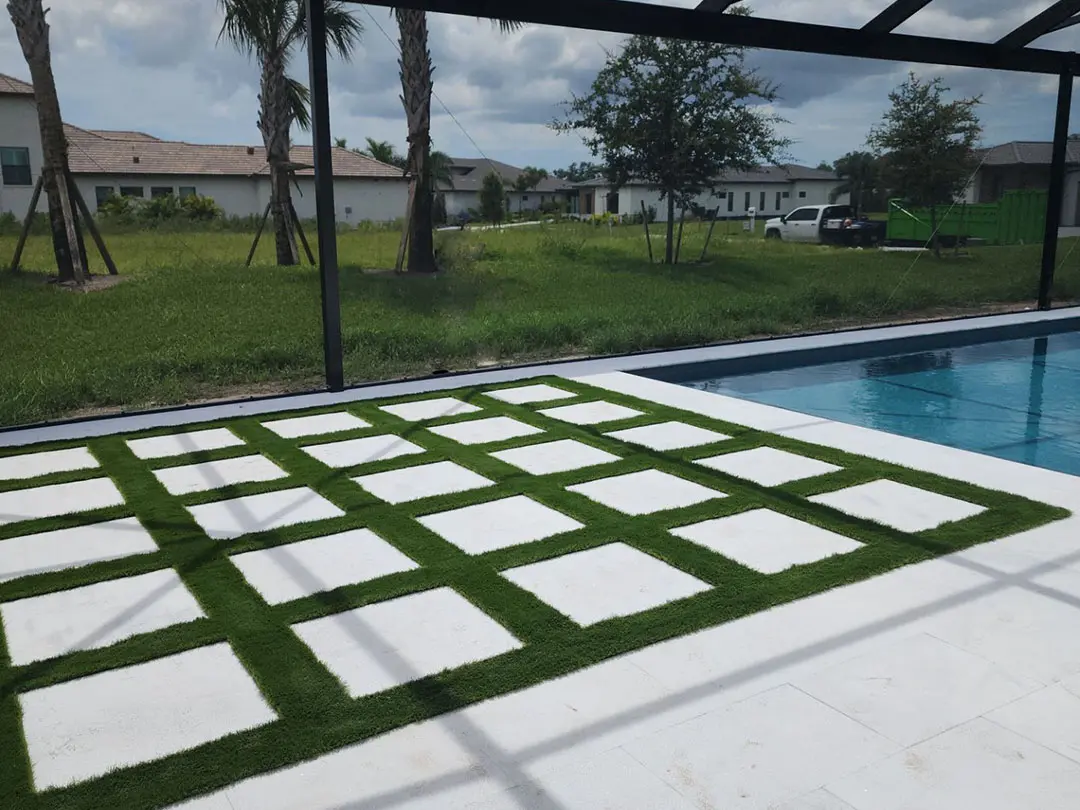
Full-scope artificial turf installation designed for Kingwood's MUD drainage infrastructure and section-specific soil conditions.

Residential turf installation for Kingwood homeowners across Forest Cove, Trailwood, Sand Creek, Royal Brook, and all other sections.

High-drainage pet turf systems for Kingwood homes and community dog parks.

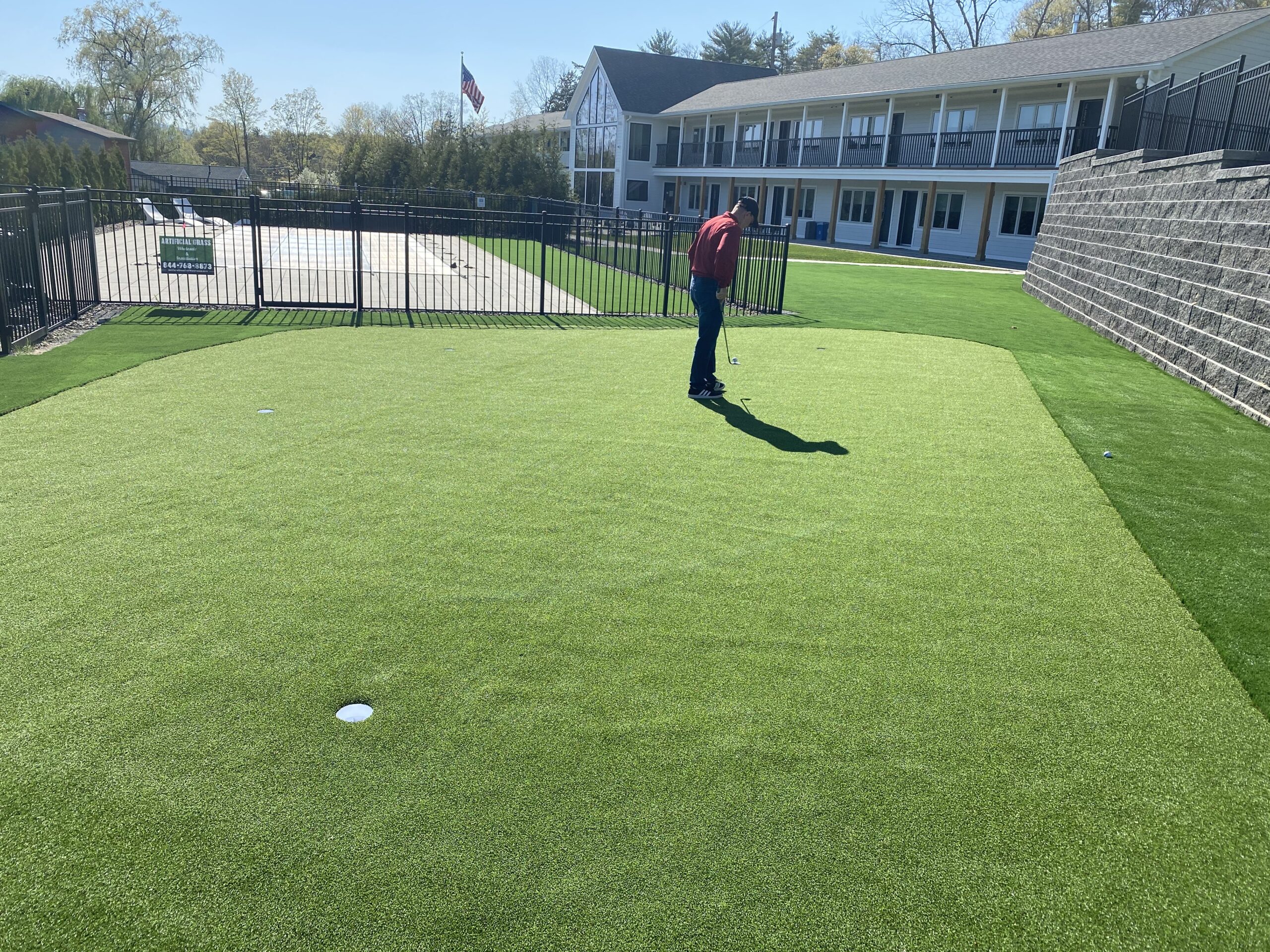
Backyard putting green installation for Kingwood golf households and community recreation facilities.

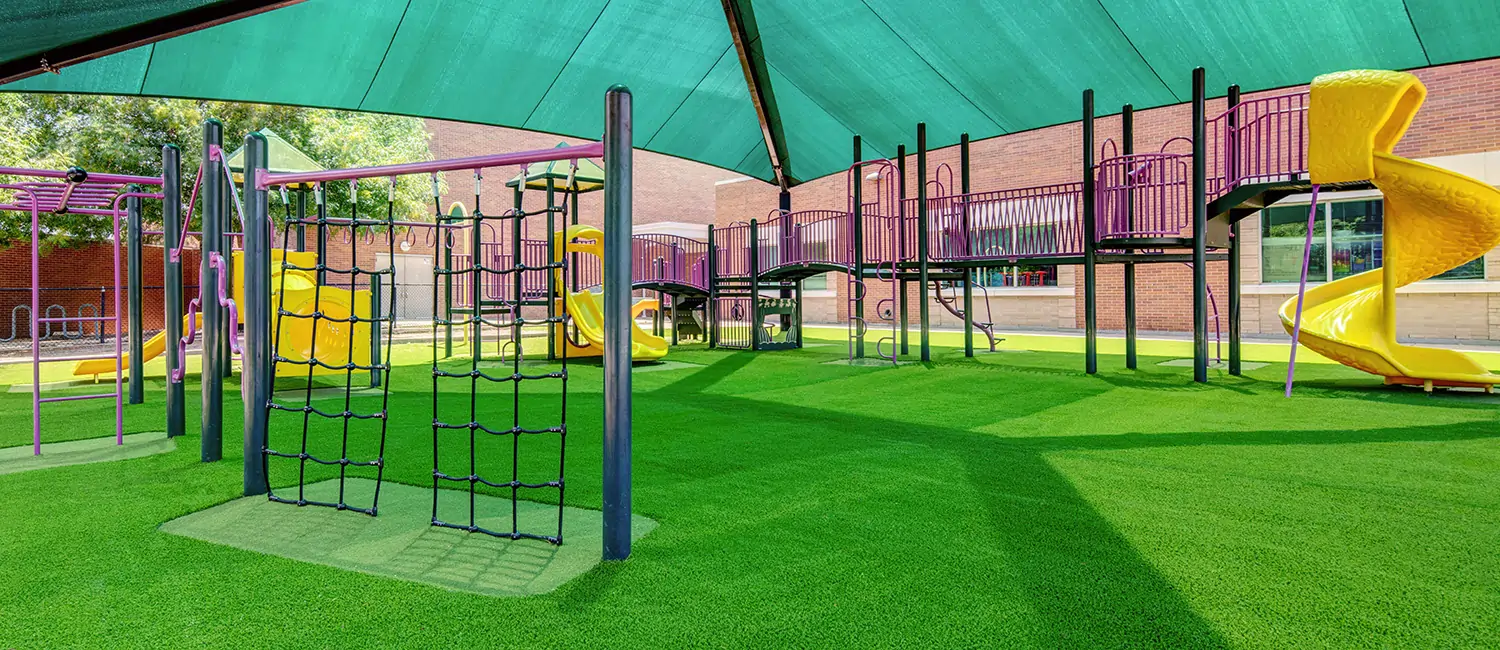
Safety-compliant playground turf for Humble ISD campuses and Kingwood HOA neighborhood parks.

Drainage base engineering designed for Kingwood's clay soil conditions and MUD infrastructure context.
Most residential turf installations do not require a city permit. However, larger commercial installations, projects that involve drainage infrastructure work, or projects near drainage easements may fall under City of Houston permit requirements. We review permit applicability during commercial project planning.
Backyard installations typically do not require HOA approval. Front yard and side yard installations visible from the street may require HOA review under Kingwood Village or section-specific guidelines. We review HOA requirements as part of residential scope planning.
We assess root proximity and depth during site review and incorporate root barrier fabric where needed to prevent future root migration into the base layer while minimizing disturbance to existing tree roots during excavation.
Eliminating irrigation reduces your MUD water consumption. The degree of reduction depends on your current irrigation schedule and the area converted. Most Kingwood homeowners with irrigated lawns see meaningful water bill reductions after conversion.
Yes. Many original Kingwood homes have side gate widths of 36-48 inches. We plan material staging and equipment selection to work within those constraints without damaging existing hardscape or fence structures.
Send project details and timeline information to get route scheduling options for this location.
Call